Understanding Containerized Water Treatment Systems
In an era where access to clean, safe water is paramount, containerized water treatment systems have emerged as a groundbreaking solution for a variety of applications. These systems leverage modular technology to offer customized water treatment processes that can be deployed quickly and efficiently across diverse environments. Whether serving municipal needs, industrial applications, or remote locations, containerized solutions allow for unmatched flexibility and adaptability. No longer constrained by geographical limitations, these systems provide potable water production capabilities irrespective of the initial water quality. As a leading water treatment systems manufacturer, QILEE is at the forefront of developing these innovative technologies that ensure safe, soft, and consumable water anywhere in the world.
What Are Containerized Water Treatment Systems?
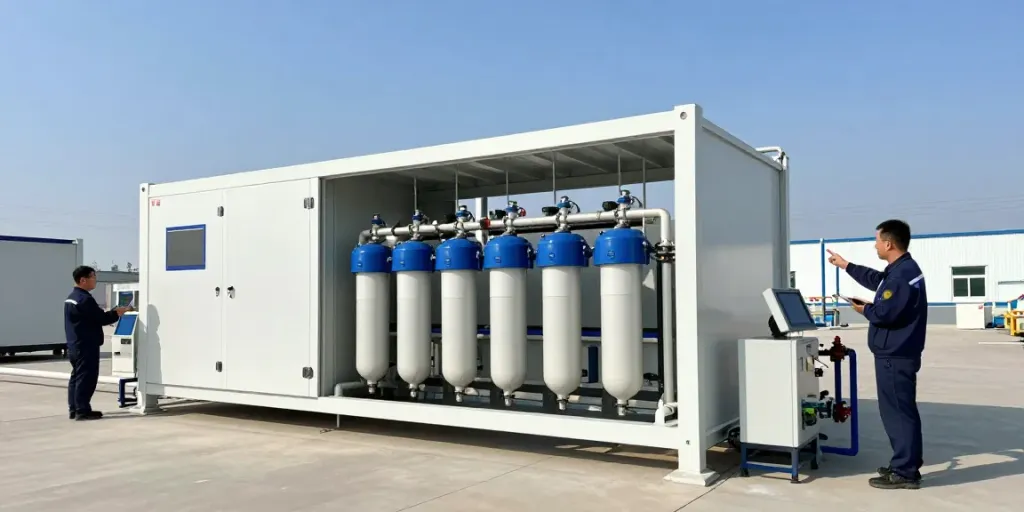
Containerized water treatment systems are self-contained units designed for the purification of water. They are engineered to incorporate the complete range of processes found in traditional water treatment plants, including filtration, disinfection, and chemical treatment. Manufactured within standard shipping containers, these systems are compact and can easily be transported to various locations as needed. The adaptability of these units makes them ideal for scenarios where water quality and availability are inconsistent, such as disaster relief zones or rapidly expanding urban centers.
Key Components and Technologies in Use
At the core of containerized water treatment systems are several key technologies, including:
- Filtration Units: These may include microfiltration (MF), ultrafiltration (UF), and reverse osmosis (RO) technologies to effectively remove contaminants and ensure water purity.
- Disinfection Systems: Utilizing ultraviolet (UV) light or chemical agents, these systems eliminate pathogens and improve water safety.
- Monitoring and Control Systems: Advanced sensors and automated controls allow for real-time monitoring of water quality and system performance, enhancing reliability.
Advantages of Modular Flexibility
One of the most significant benefits of containerized water treatment systems is their modular flexibility, which allows them to be tailored to meet various needs. As demand for water treatment solutions continues to rise, having a customizable system can be game-changing.
Customizable Solutions for Different Needs
Containerized systems can be designed with specific configurations and technologies based on the unique requirements of the user. For example, pharmaceutical companies may prioritize high-purity specifications, while municipal applications may focus on large-scale volume treatment. This customization ensures that the system not only meets but exceeds regulatory requirements.
Easy Relocation and Installation
Unlike traditional water treatment facilities, which often require extensive construction and site preparation, containerized systems can be deployed with minimal effort. With installation typically taking only 3–7 days, these units are perfect for emergency response scenarios where rapid deployment is essential.
Rapid Deployment and Operational Efficiency
Containerized systems can significantly reduce the operational timeline, enabling organizations to tackle water scarcity issues promptly. Their prefabricated nature allows for an overall deployment cycle shortened by up to 60%, ensuring that communities can access clean water in record time.
High-Purity Water Production Techniques
As industries demand higher purity levels in their water supply, containerized water treatment systems have adapted to meet these needs through advanced technologies such as reverse osmosis (RO) and electrodionization (RO-EDI).
Reverse Osmosis and RO-EDI Technologies Explained
Reverse osmosis is a key technology used in containerized systems to remove a wide range of impurities and contaminants. This process forces water through a semi-permeable membrane, effectively filtering out dissolved solids and other non-desirable substances. Meanwhile, RO-EDI systems combine reverse osmosis with ion exchange technology to produce extremely high-purity water suitable for critical applications, such as in pharmaceuticals and laboratories.
Applications in Pharmaceuticals and Laboratories
In sectors that demand the highest quality of water, such as pharmaceuticals, containerized systems provide a reliable and efficient solution. These systems ensure that the water produced meets stringent quality standards, minimizing risks associated with impurities that could compromise product integrity.
Quality Control and Monitoring Systems
Quality control is integral to any water treatment process. Containerized systems are equipped with advanced monitoring tools that provide real-time data on water quality, enabling operators to maintain optimal conditions. These systems can also be operated remotely, allowing for efficient management without the need for on-site personnel.
Environmental Considerations and Resource Recycling
As sustainability becomes increasingly important in industrial practices, containerized water treatment systems are designed to incorporate environmental considerations, including the reuse of reclaimed water.
Integration of Reclaimed Water Reuse Modules
The ability to integrate reclaimed water reuse modules allows for efficient resource management. This integration not only conserves water but also reduces the demand on freshwater sources, aligning with global sustainability goals.
Resource Recycling Rates in Containerized Systems
Containerized water treatment systems support high resource recycling rates, achieving up to 80% in some cases. This level of efficiency is crucial in industrial settings, where water is a finite resource that must be utilized wisely.
Impact on Sustainability Efforts
With growing pressure on companies to adopt environmentally friendly practices, containerized systems present a viable solution. Their ability to recycle water and reduce the environmental footprint directly contributes to broader sustainability efforts, enabling industries to meet both their operational needs and corporate social responsibility goals.
Future Trends for Water Treatment Systems in 2026
Looking ahead, the water treatment sector is poised for significant advancements. As technology evolves and regulations tighten, the demand for efficient, effective water treatment solutions will only increase.
Innovations in Filtration Technology
Future innovations in filtration technology, including more efficient membranes and enhanced chemical treatments, will further improve the capabilities of containerized systems. Developments in nanotechnology and smart materials may revolutionize the purification processes, leading to even greater efficiency.
Regulatory Changes and Compliance Needs
As governments around the world begin to impose stricter regulations on water quality, containerized systems will need to adapt to remain compliant. Manufacturers will enhance their systems to meet and exceed these regulations, ensuring that industries have access to safe, high-quality water.
Anticipated Market Growth and Opportunities
The market for water treatment systems is expected to grow significantly by 2026, driven by expanding urban populations, industrial growth, and climate change. Companies that invest in innovative, flexible technologies like containerized systems stand to gain a substantial competitive advantage.