Understanding Rogers Microwave PCB Materials
As technology advances, the demand for high-performance printed circuit boards (PCBs) continues to escalate, particularly in high-frequency applications. Among these, Rogers microwave PCB stands out as a preferred choice due to its unique materials and capabilities. This article delves into the characteristics, applications, manufacturing processes, and emerging trends affecting Rogers microwave PCBs and their significance in today’s technological landscape.
What is Rogers Microwave PCB?
Rogers microwave PCBs are specialized substrates engineered to manage high-frequency signals and are crucial for applications like wireless communication, aerospace, and radar technology. These PCBs utilize advanced materials, primarily based on hydrocarbon ceramic laminates, which are designed to provide optimal performance in environments where traditional materials may falter.
The flagship materials from Rogers, such as RO4000, RO3000, and RT/duroid series, boast low dielectric loss and stable dielectric constants, making them ideal for RF and microwave frequency operations. Their superior thermal and electrical characteristics enable the design of intricate circuits that are both robust and reliable.
Key Characteristics and Benefits
Rogers microwave PCBs offer several key characteristics and benefits:
- Low Loss: The materials used minimize transmission losses, ensuring efficient signal propagation.
- High Thermal Conductivity: This allows for better heat dissipation, which is critical in high-power applications.
- Stable Dielectric Properties: Rogers materials maintain consistent performance over a broad frequency range.
- Customization: These materials can be tailored to meet specific application requirements, from dielectric constant to thickness.
- Durability: Rogers PCBs are highly resistant to temperature variations and environmental factors, ensuring a long service life.
Comparing Rogers Materials with Alternatives
When comparing Rogers materials to alternatives like FR-4, it is essential to focus on performance aspects. FR-4 is generally effective for lower-frequency applications but often falls short in high-frequency scenarios due to its higher loss factors. In contrast, Rogers microwave PCBs provide enhanced performance metrics that suit high-frequency and precision applications, making them indispensable in industries such as telecommunications and aerospace.
Additionally, Rogers materials offer superior mechanical stability, which is crucial for maintaining reliability in dynamic and challenging environments. The trade-off in cost is often justified by the performance benefits and long-term reliability they provide.
Applications of Rogers Microwave PCB
High-Frequency Communication Technologies
The telecommunications industry is among the most significant users of Rogers microwave PCBs. Devices such as cell towers, satellite communications, and radar systems necessitate circuits that transmit signals with minimal loss. Rogers materials, with their tailored dielectric properties, are expertly engineered to fulfill these demanding roles, enabling faster and more reliable communication.
Automotive Radar Systems
In the automotive sector, the rise of autonomous vehicles has intensified the need for advanced radar and sensor systems. Rogers microwave PCBs play a crucial role in automotive radar systems by enabling high-resolution detection and versatile functionalities. Their ability to withstand extreme environmental conditions while still performing optimally makes them an ideal choice for automotive applications.
Aerospace and Defense Applications
Aerospace and defense represent another sector where Rogers microwave PCBs excel. The requirements for reliability and performance in these applications are paramount. Rogers materials are used in systems ranging from communications satellites to avionics, where they help maintain signal integrity under rigorous operational conditions. The ability to adapt Rogers PCBs for specific aerospace requirements underlines their versatility and importance in critical applications.
Manufacturing Processes for Rogers Microwave PCB
Step-by-Step PCB Fabrication Techniques
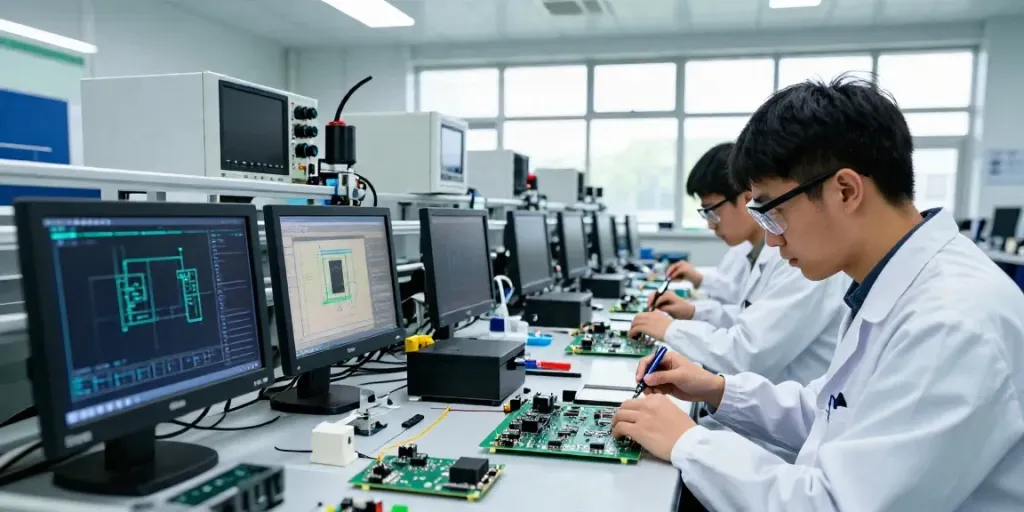
The fabrication of Rogers microwave PCBs involves several steps:
- Material Selection: Choosing the appropriate Rogers laminate based on the application requirements.
- Design Layout: Utilizing CAD software to create intricate designs that align with performance specifications.
- Etching: Precision etching processes are implemented to form the circuit patterns on the laminate surface.
- Plating: A layer of copper is plated onto the etched areas to create conductive pathways.
- Final Inspection: Rigorous testing procedures are conducted to ensure the PCBs meet quality standards before delivery.
Best Practices for Quality Control
Ensuring the highest quality standards is essential in PCB manufacturing, especially for high-frequency applications. Here are some best practices:
- Regular Equipment Calibration: This ensures that the manufacturing processes are consistently accurate.
- Comprehensive Testing: Employing both in-process and final testing techniques helps catch issues early.
- Supplier Quality Assurance: Working with reputable suppliers for raw materials contributes significantly to overall product quality.
Challenges in Production and Solutions
Manufacturing Rogers microwave PCBs presents unique challenges, such as maintaining tolerances for high-frequency applications. Addressing these challenges includes investing in state-of-the-art manufacturing equipment and training personnel in specialized techniques. Furthermore, advancements in simulation software can help identify potential issues in the early design stages, reducing costly errors in production.
Innovative Design Strategies for Rogers Microwave PCB
RF Design Principles to Enhance Performance
When designing RF circuits with Rogers microwave PCBs, several principles should be adhered to in order to enhance performance:
- Minimize Interconnect Length: Keeping connections short helps reduce inductive and capacitive losses.
- Impedance Matching: Proper impedance matching is crucial to minimize signal reflection and maximize power transfer.
- Layer Stack Management: Optimizing the layer stack can significantly affect performance at high frequencies.
Utilizing Simulation Tools for Optimization
Simulation software plays a vital role in the design and optimization of Rogers microwave PCBs. Tools such as electromagnetic simulation software allow engineers to visualize electromagnetic fields and predict circuit performance under various conditions. By incorporating simulation tools early in the design process, engineers can make informed decisions that lead to improved circuit performance and reduced prototyping time.
Case Studies of Successful Implementations
Several organizations have successfully implemented Rogers microwave PCBs in their applications. For instance, a telecommunications company improved the efficiency of their high-frequency communication systems by 30% by integrating Rogers materials into their PCB designs. Similarly, an aerospace manufacturer was able to reduce the weight of their radar systems substantially while increasing performance metrics, showcasing the significant advantages of Rogers microwave PCBs across various applications.
Future Trends in Rogers Microwave PCB Technology
Emerging Technologies Shaping the Future
As we look towards the future, several trends are beginning to shape the landscape of Rogers microwave PCB technology:
- 5G Implementation: The rollout of 5G networks requires new designs optimized for higher frequencies, where Rogers materials excel.
- Smart Technologies: Development in IoT devices presents opportunities for Rogers PCBs to support communication in smart environments.
Environmental Considerations in Manufacturing
With growing environmental concerns, the PCB industry, including Rogers manufacturers, is adopting sustainable practices. This includes using eco-friendly materials and optimizing fabrication processes to reduce waste and energy consumption. These changes are not only beneficial for the environment but are increasingly demanded by consumers and regulatory bodies.
Predictions for the Industry in 2026 and Beyond
By 2026, it is expected that Rogers microwave PCBs will see even wider adoption due to advancements in material science and manufacturing processes. Innovations such as high-performance flexible substrates and enhanced thermal management techniques will significantly broaden their applications. As trends such as the Internet of Things (IoT) and autonomous systems continue to evolve, the demand for reliable, high-frequency PCBs will remain strong, positioning Rogers materials at the forefront of this technological revolution.
Can a PCB be repaired?
Yes, PCBs can often be repaired; however, the complexity of the repair depends on the specific damage and the PCB material. For high-end applications like those using Rogers materials, repairs might require specialized techniques or even replacement due to the precision needed.
Who are the top 10 PCB manufacturers?
The landscape of PCB manufacturing is diverse, with several companies recognized for their quality and technological advancements. Some of the top manufacturers include companies like Jabil, Flex, and PCBWay, known for their innovative approaches and extensive service offerings in the PCB space.
What is PCB in the microwave?
A PCB in the microwave refers to a printed circuit board designed to operate at microwave frequencies, usually above 1 GHz. These PCBs must be constructed from materials that can handle high-frequency signals effectively without significant loss.
What is a Rogers PCB?
A Rogers PCB is a type of printed circuit board made from materials developed by Rogers Corporation, which are designed specifically for high-frequency applications. These materials are known for their low loss, stability, and suitability in demanding environments.
How does Rogers compare to other materials?
Rogers materials generally outperform traditional PCB materials like FR-4 in high-frequency applications due to their lower dielectric loss and superior thermal properties. This makes them ideal for applications involving RF communication, radar, and advanced telecommunications.